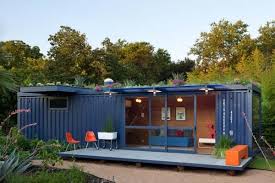
In an era defined by compounding ecological anxieties and escalating urban real estate valuations, alternative architectural paradigms have transitioned from peripheral subcultures to mainstream considerations. Foremost among these movements is cargo-container architecture, colloquially known as "shipping container homes." By transforming rigid, standardized steel modules—originally engineered to withstand the rigorous conditions of transoceanic freight—into habitable, structurally sound domestic spaces, innovative designers are challenging traditional notions of residential construction. This analytical essay explores the geographical distribution, socio-economic viability, and profound environmental benefits of containerized housing, evaluating its capacity to serve as a cornerstone for future
eco-friendly living.
Geographical Horizons: Where Steel Meets Soil
The proliferation of container architecture is globally uneven, heavily influenced by local zoning ordinances, building codes, and cultural receptive-index thresholds. Geographically, these structures have achieved remarkable prominence across North America, Northern Europe, and parts of Oceania. In the United States, states with progressive zoning frameworks and acute housing shortages, such as California, Texas, and Colorado, host a growing number of custom container estates and multi-family developments. Similarly, the Pacific Northwest has emerged as a fertile incubator for container-based architectural experimentation due to
its cultural alignment with ecological preservation.
On the international stage, the Netherlands stands as a pioneering vanguard. In Amsterdam, large-scale container configurations, such as the Keetwonen student housing complex, have demonstrated that modular shipping containers can effectively resolve dense urban housing deficits without demanding protracted construction timelines. Furthermore, regions like coastal Australia and New Zealand utilize container architecture to withstand extreme meteorological events; the innate structural integrity of the monocoque steel frame offers superior resilience against seismic activity and high-velocity winds compared to conventional timber-framed construction.
The Microeconomics of Structural Upcycling
From an economic standpoint, shipping container homes present a nuanced fiscal narrative that balances reduced foundational costs against specialized modification expenses. The core economic appeal lies in the acquisition of a cheap, prefabricated structural envelope. Because the primary load-bearing elements—walls, roof, and floor—are already intact, developers can bypass several initial phases of traditional
carpentry and masonry. For budget-conscious demographic cohorts, single-container tiny homes offer an accessible entry point into property ownership, radically undercutting the median price per square foot of conventional real estate markets.
However, comprehensive economic assessments must account for secondary systemic requirements. While the raw steel chassis is inexpensive, converting a industrial shell into a code-compliant residential dwelling demands specialized labor. Precision plasma-cutting is required for window and door fenestrations, which simultaneously compromises the structural integrity of the monocoque design, necessitating reinforcement with interior steel or timber framing. Additionally, the integration of modern plumbing, HVAC systems, and electrical grids within a constrained geometric footprint introduces spatial complexities that can escalate marginal labor expenses. Consequently, while container homes offer substantial
cost advantages—often ranging from 15% to 30% savings relative to traditional custom builds—their financial efficiency is contingent upon meticulous logistical management and engineering optimization.
The Cradle-to-Grave Ecological Dividend
The most compelling justification for container housing resides within its profound
contribution to environmentally friendly living. At its core, the practice embodies the
principles of the circular economy through high-order industrial upcycling. The global
shipping industry continuously grapples with a systemic trade imbalance, resulting in
hundreds of thousands of empty, abandoned steel containers accumulating at maritime ports.
Returning empty containers to their points of origin is frequently cost-prohibitive for freight corporations. Consequently, repurposing these stranded assets prevents them from becoming industrial waste or requiring the massive energy expenditure associated with melting them down for raw scrap recycling.
By intervening in this linear waste stream, container architecture achieves a dramatic
reduction in embodied energy—the total energy consumed during the extraction, processing, and transportation of building materials. Conventional residential construction relies heavily on carbon-intensive materials such as portland cement block, virgin timber, and kiln-fired brick. Upcycling a single forty-foot container instantly saves approximately 3,500 kilograms of structural steel, bypassing the severe ecological degradation inherent to open-pit mining and metallurgical refining processes.
Synergizing with Green Building Technologies
Beyond the structural frame itself, container homes act as exceptional catalysts for secondary sustainable living technologies. The geometric simplicity of their flat, rectilinear roofs creates an ideal foundation for the deployment of photovoltaic solar arrays and extensive green roof systems. Green roofs, which utilize living vegetation layers over waterproof membranes, provide critical thermal mass, mitigate urban heat island effects, and dramatically reduce stormwater runoff. Furthermore, the compact internal dimensions of container homes naturally enforce a minimalist lifestyle, forcing a reduction in consumer accumulation and a corresponding drop in household per-capita carbon footprints.
To achieve true environmental synergy, modern container structures employ cutting-edge insulation methodologies to overcome steel's high thermal conductivity. Uninsulated steel acts as a thermal bridge, rapidly transferring external atmospheric temperatures to the interior, which would otherwise mandate unsustainable expenditure on artificial heating and cooling. To counteract this, sustainable architects implement advanced closed-cell spray polyurethane foam or natural cork insulation layers, establishing a continuous, airtight thermal envelope. When paired with high-efficiency heat recovery ventilators (HRVs) and greywater recycling systems that repurpose sink and shower effluent for sub-surface irrigation, container homes transition from mere industrial novelties into hyper-efficient, self-sustaining thermodynamic ecosystems.
Ultimately, cargo-container architecture represents a sophisticated intersection of industrial design, practical economics, and ecological stewardship. While they are not a singular panacea for the global housing crisis—owing to regulatory challenges and specialized fabrication demands—they offer a highly viable, scalable alternative to resource-intensive building practices. By transforming surplus steel vectors of global commerce into efficient, climate-resilient residential sanctuaries, container homes demonstrate how architectural innovation can actively diminish our ecological deficit, paving a tangible path toward a more sustainable and economically equitable built environment.
Living Inside The Box
Staff Writer
May 19, 2026 • 5 min read